MARVIN x Bryan Ferry: Ferry still packs a punch

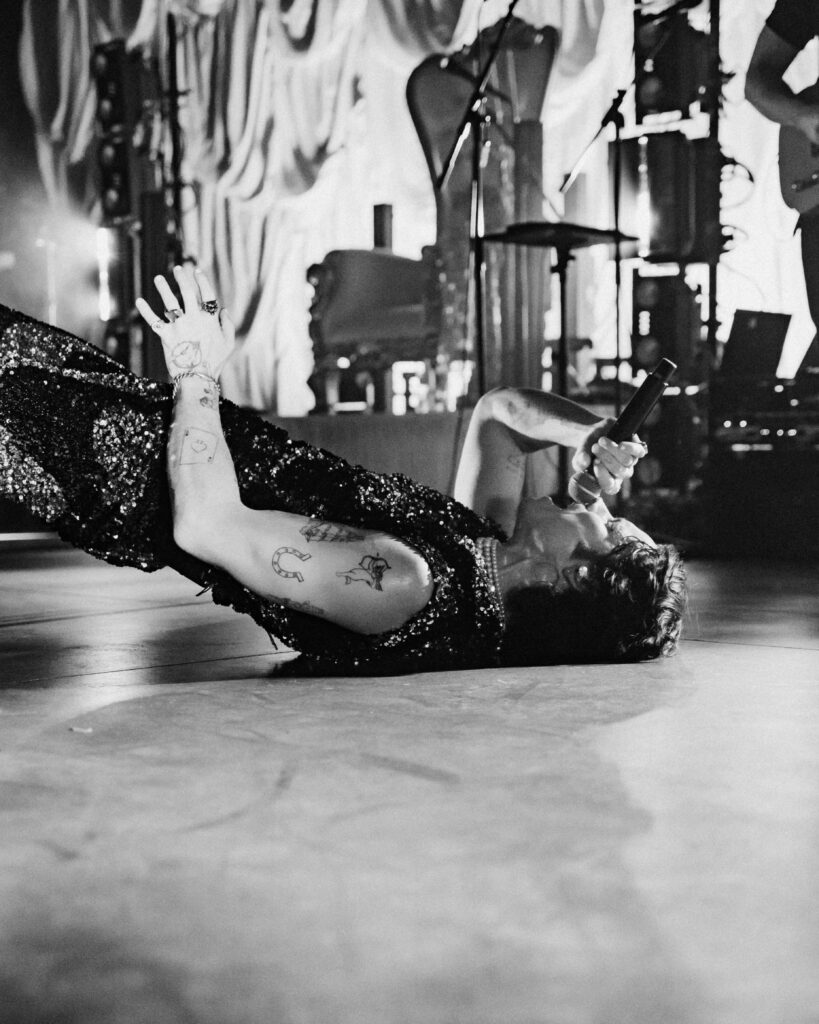
INDIO, CA – APRIL 18: Singer Bryan Ferry performs onstage during day 1 of the 2014 Coachella Valley Music & Arts Festival at the Empire Polo Club on April 18, 2014 in Indio, California (Photo by Kevin Winter/Getty Images for Coachella)
Brian Ferry has done it all. “I have been very fortunate in having had at least two careers,” he says with a laugh in a conversation this March. The British artist has moved from creating genre-defining art-rock as the frontman of Roxy Music into the immaculately suited crooner of his solo artist years, and, at 79, he is shapeshifting once again. A new album with the spoken word artist and performer Amelia Barratt sees Ferry revisit his cavernous archive of previously-unreleased music, with these compositions set to poetically mesmerizing intonations from his new collaborator. In a candid conversation, the legend opened up to MARVIN about his bold new direction, his status as a style icon, and how he feels about the Roxy Music years today.
Your new album Loose Talk is in collaboration with Amelia Barratt. What drives your desire to seek out new sounds and collaborators?
I guess it’s what I do. Making new work is exciting for me. This collaboration has been, and is still, an ongoing, exciting project. It’s always good to feel you’re exploring new ground, and it’s the first time I’ve worked with anyone else’s words alongside my music. That in itself is exciting. Amelia is a really great writer and presenter of her work and her words.
I love the record; it sounds amazing. Last year, you released “Star,” a song created with Trent Reznor and Atticus Ross as well as Barratt. Were you already recording Loose Talk at the time?
“Star” came slightly before. We worked on it over a long period, and the demo that started it was one of a couple of things Trent Reznor and Atticus Ross sent me. I’d met them a few times, which was exciting in itself. I was turning it into the track it became, and Amelia listened to it. I asked if she could help with the lyrics, and she did a great job.
During that process, we also started working on the first track of the album, which sprang from there. I thought, “This really works.” I’d helped Amelia with her audiobook a few years ago — in maybe 2021 or 2022 — and I enjoyed that. I told her that the vignettes she wrote would sound great with music, and they did. We tried not to get in the way of the words. The musicians I worked with on this project were a mix of familiar faces and a few new ones, and they’re kind of tried and tested people.
And you met Amelia randomly at an art gallery?
Yeah. We have friends in common who are in the art world. And I went to see one of her performances that she did over in [London’s] East End, and she just read one piece. I thought, “Oh, that’s really good,” and it all sprang from that.
I heard that you drew from your archive of music to create Loose Talk. Is that true?
Over time, I’ve tried out ideas and recorded them on cassette, phone, or whatever was available. Sometimes these ideas turn into songs, and other times, I can’t find the right place for them until years later. This happened with a piano piece from the early ’70s that I could never quite figure out. Eventually, it became one of the best tracks on the album, “White Noise.” It’s hard to say why it works, but it does.
It definitely feels like your elegant touch comes through.
There’s a haunting quality to [Barratt’s] texts. I mean, they’re kind of scenes from everyday life, you know, but there’s, there’s something quirky about Amelia. She has a good sense of humor, and I think that comes through. There’s a wryness and a coolness there that I like. And I kind of jazz it up a bit.
Now, I was also told that you don’t sing on the record, but it sounds like your voice is on the song “Orchestra.”
Yeah, I sing background on a couple of things. It feels like I’ve opened the door to a new chapter of my work, and that’s very cool for me.
That’s awesome. I love the music video for “Star.”
Yeah, we did that. We filmed Amelia in my studio, just below where I’m sitting, in the part of the studio complex here. It went really well. I also filmed some stuff in New York, and then we edited everything together. It was just the three of us—Amelia, me, and James, my engineer, who I work very closely with. He’s a young guy as well. What’s interesting is that Amelia is the face up front; she’s a woman from a different generation than mine, and James is also from that generation. It makes the collaboration even more interesting and different to have those perspectives.
Roxy Music’s songs are so timeless. Was there ever a moment when you realised that your older music was connecting with a new generation?
Bill Murray seeing “More Than This” in Lost In Translation was a good one. I’d met Sofia Coppola before, and she asked me if she could use that song. It was great; it was used in a pivotal moment of the movie and it worked very well. I think Bill Murray sang it better than me.
You’ve played in Japan before, right?
Oh yes, I’d like to think it’s a very special audience. They seem to appreciate the things I do, and they’re quite stylish people. I experiment with various styles, and I think they really appreciate that.
I’m a big Japan fan, and I go there a couple times a year.
I wish I did, but it’s quite a long way from here. Are you in LA?
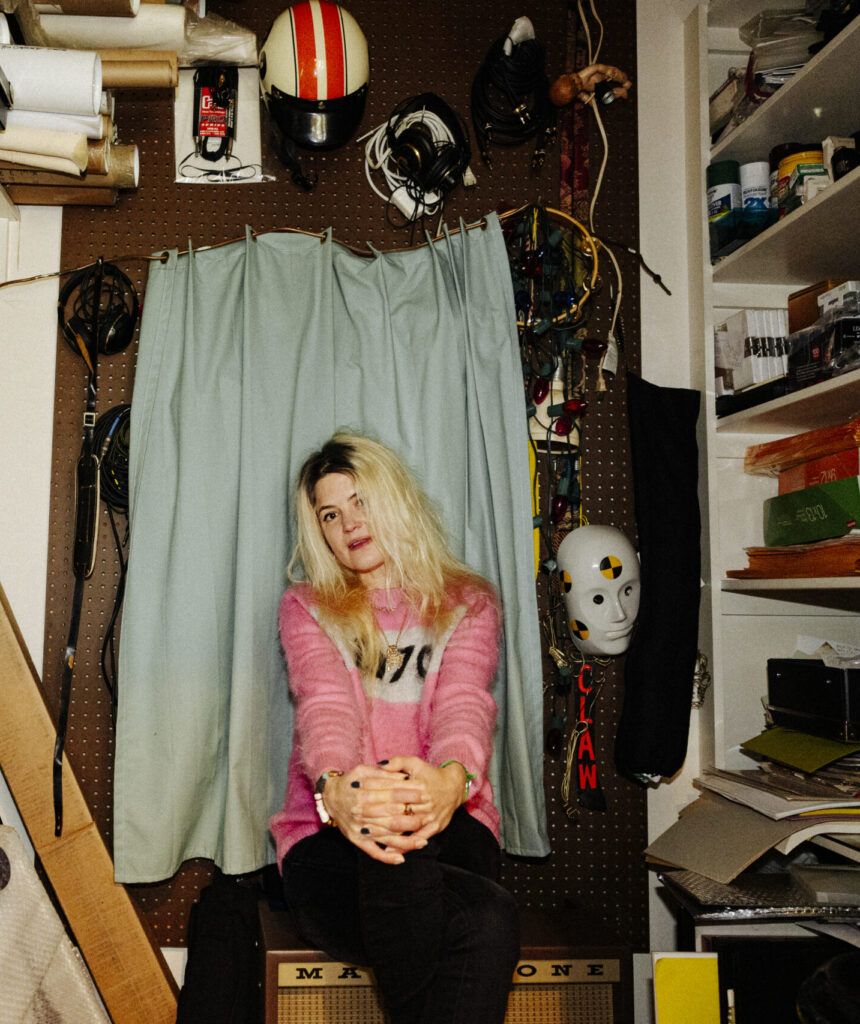
I live there, but I happen to be in London right now. I’m staying at a place called the Chateau Denmark on Denmark Street. This room used to be the Sex Pistols’ old rehearsal space.
I was wondering what the graffiti was behind you.
It’s all the original art here, behind glass.
I was staying in a place in Paris last week called Château Voltaire. There’s a lot of châteaus in Paris, of course. Chateau Marmont, of course, I know very well. I once did a video in there.
You’re known for your style; it’s a big part of your persona. Do you keep up with contemporary designers?
No, no. I haven’t been to a show in a long time, actually. I used to enjoy it if I was in Paris and the collections were on. When I was living there I went to quite a few shows. That was around the time I did the “Slave to Love” video. When I was doing the Bête Noire album I recorded there quite a bit and went to showsq gf. I’m not that in touch with the fashion world now, per se. However, I do go to contemporary art shows, galleries, and museums if they’re showing a retrospective.
Last year in LA, I went to the Ed Ruscha show, which was great. I go to a lot of big museum shows when I can, because sometimes they collect pictures from private collections all over the world. It’s the only chance you have to see something like 30 Vermeers in one show. I was lucky to go to the Vermeer show in Amsterdam a couple of years ago.
I studied art when I was in college, and I’ve never stopped being a visual person. It’s great now that you can make videos on your phone — it’s crazy, really. The technology is so fantastic that you can do that. In the old days, we’d have a crew of 20 or 30 people to make a music video. But now, you wouldn’t do that — or at least I wouldn’t. It’s great that you can just do it yourself now and immediately translate your ideas and feelings.
What was the first music video that you did with Roxy Music?
That one [“Re-Make/Re-Model”] was the best one we did [laughs]. And that was just up the road here at the Royal College of Art. So it’s midway between where I am now and where you are in Denmark Street. That was a good moment.
Do you look back fondly on the Roxy years?
Oh God, yes. I mean, I have been very fortunate in having had at least two careers. So I had the band and the repertoire with them, which was mainly the vehicle for my songs. This great band of unique characters that was Roxy. Then, I started, kind of for fun, doing covers of songs that I liked, written by other people. The first one being Bob Dylan’s “A Hard Rain’s A‐Gonna Fall. That was a big hit for me, and it just became a parallel career.
The solo career was mainly me sort of playing around stylistically with existing songs from different eras. It was a way of expanding my repertoire and doing songs that were maybe more approachable than the songs I wrote myself, which were a bit weird.
I love the Roxy Music videos. I always found them very inspirational.
The first couple of years, we were more kind of into the look. A friend of mine, Antony Price, was a crucial part of that. He had been a star fashion student at the Royal College of Art, and he helped me with the album covers. He also did clothes for me, which I wore on stage and in my career. So Antony and one or two other designers helped us, and it was all kind of, “Let’s try this, or let’s try that.” We were just having fun with the presentation of the music.
The music was serious, but it seemed fun to present it with a bit of verve and flair. Even some of the early blues singers were quite flamboyant characters. Lead Belly, for example, was a bit of a dandy. And then, the other people I later got into, like Charlie Parker and Miles Davis, were always very cool dressers and looked great when they performed.
That brings me back to “Loose Talk” on the album. That’s pretty much a full on rock track, isn’t it?
Yeah, it is. I was trying out different things with the text and seeing what would fit the mood and what would be appropriate for each piece of writing. I’m glad I experimented a bit. So the final track, the title track, has a bit of a punch.