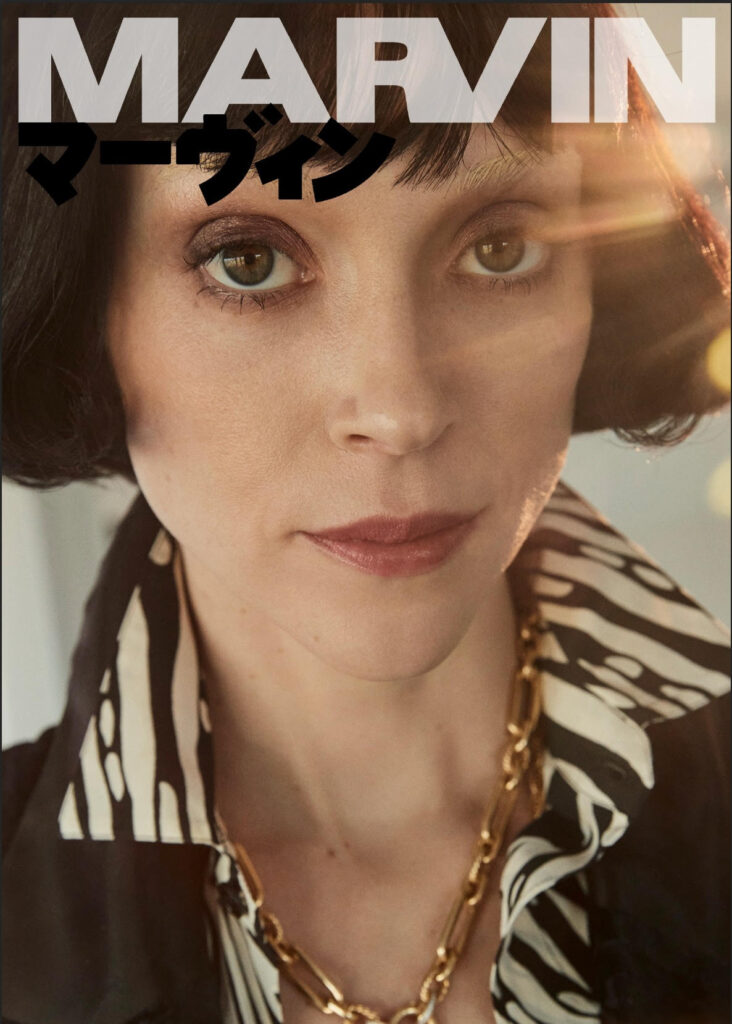
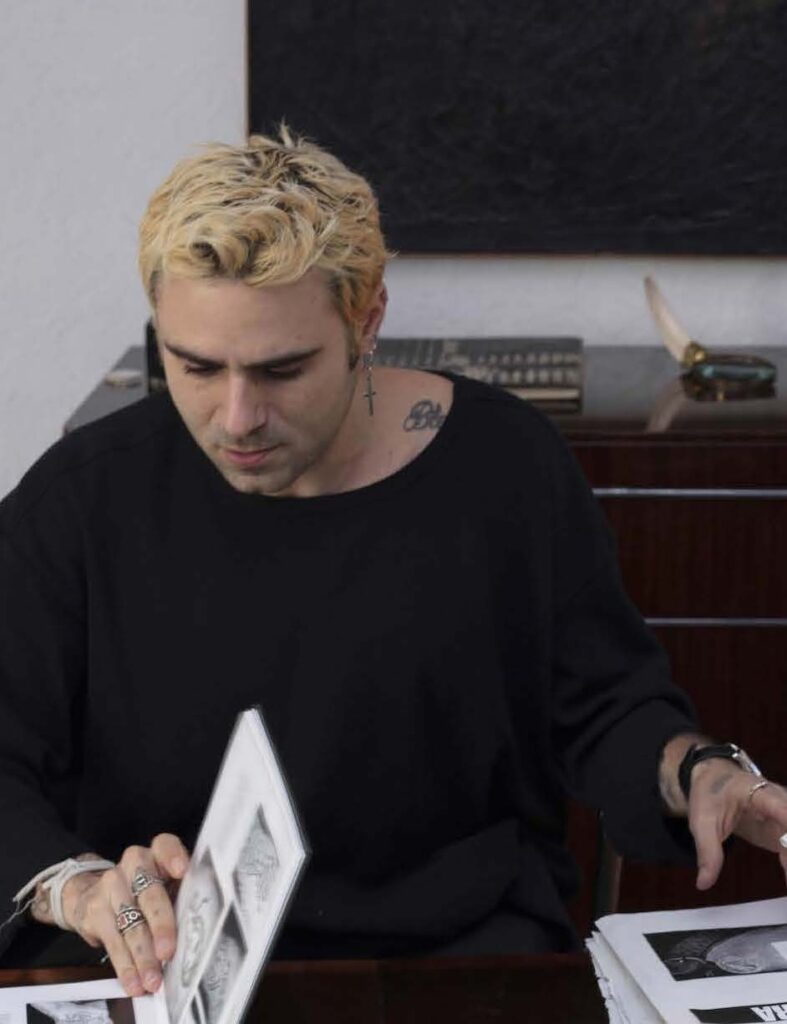
“She was burned at the stake”: MELISSA AUF DER MAUR on Courtney Love, the 90s and finding her way back to music
The musician opens up
about the mistreatment
of her band mate in the 90s
and the enduring power of their friendship
Words by Elizabeth Aubrey
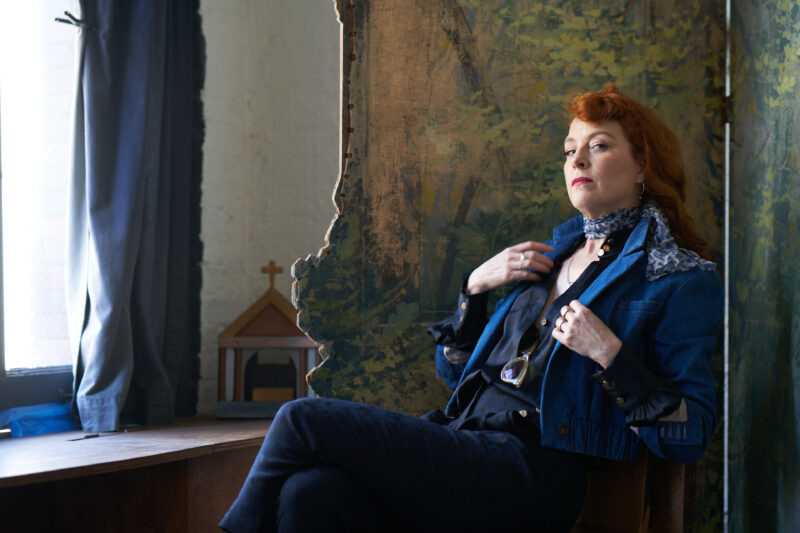
Photos by Matthew Salacuse
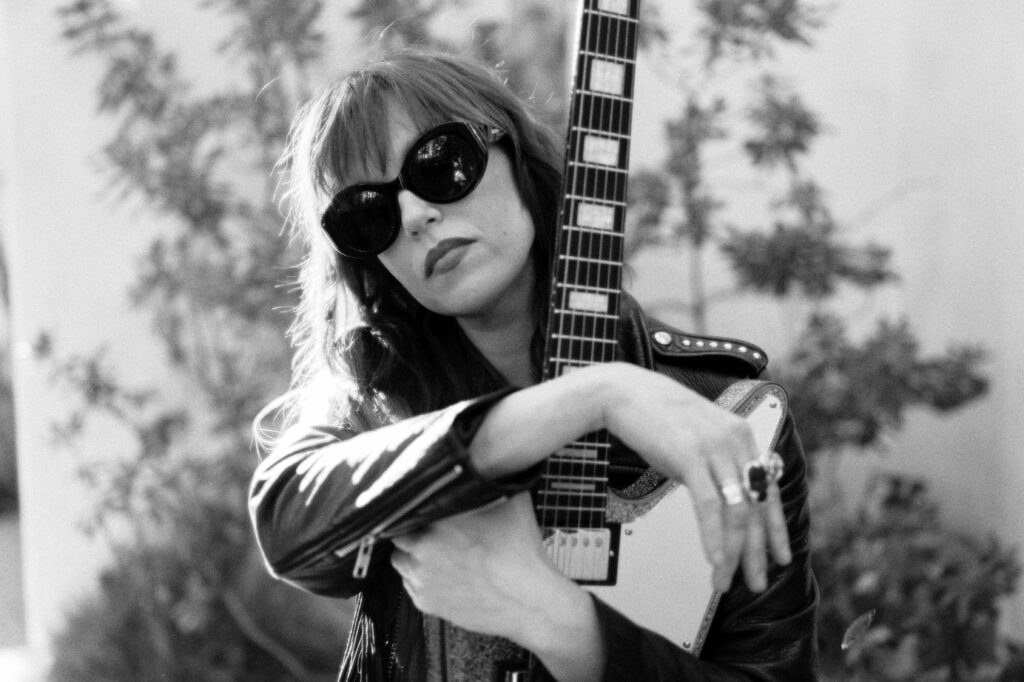
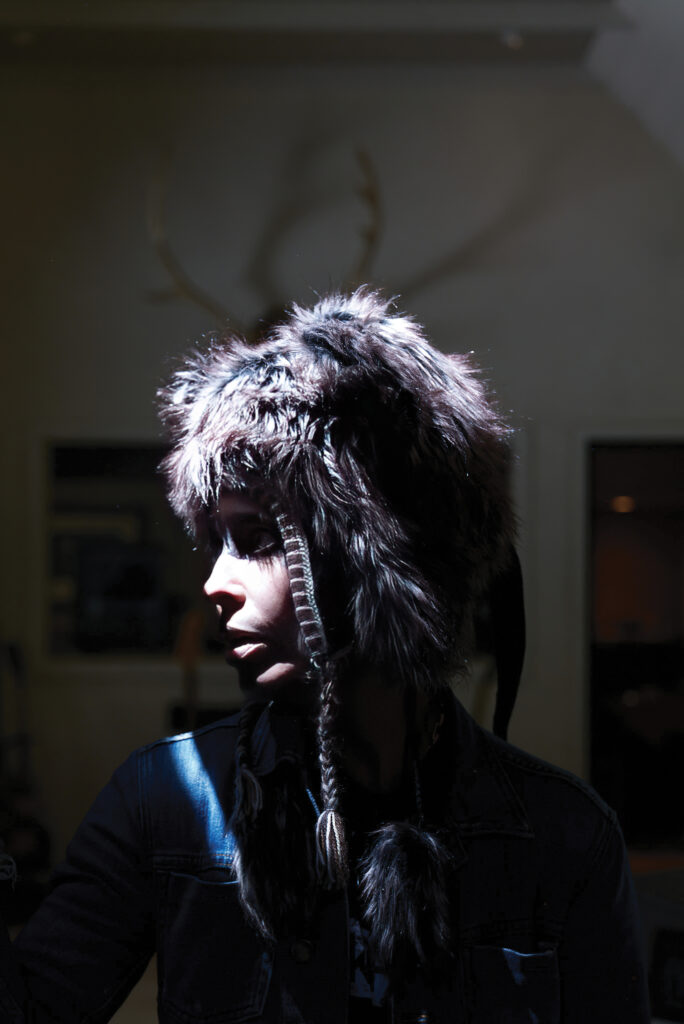
“She was like some fearless warrior,” musician and photographer Melissa Auf der Maur says of her friend and former bandmate Courtney Love. They first shared a stage together in 1994 as part of Hole, the iconic 90s feminist rock band. In her new memoir, Even the Good Girls will Cry, she reflects on coming-of-age as a bass player in two legendary bands: Hole and The Smashing Pumpkins. Excess, tragedy, loss and misogyny loom large in this story, but so too does sisterhood. “The reclaiming and reframing of the power of Courtney Love is so essential to this book,” Auf der Maur continues. “She was burned at the stake. This woman’s life was badly handled: it’s a miracle she’s alive.”
Auf der Maur first spoke to Love amid a frenzied media storm and a torrent of grief. Love’s husband, Nirvana frontman Kurt Cobain, died by suicide in the spring of 1994. Two months later, her bass player in Hole, Kirsten Pfaff, died from a heroin overdose. At the time, Auf der Maur was a photography student making waves in the indie music scene with her band Tinker. The band gained a fan in Smashing Pumpkins frontman Billy Corgan, who later recommended the bassist to Love.
But at the time, the 22-year-old musician struggled with the idea of joining Hole. While everyone close to her encouraged her to join, her instinct said no after seeing the “chaos storm of pain” surrounding the band. Love was vilified daily by a misogynistic media that blamed her for Cobain’s death, while Hole’s reputation was skyrocketing following rave reviews of their second album, Live Through This. Auf der Maur says it was an “overwhelming” prospect, “as a young woman about to come of age in this insanely public life.”
“So much death and drama surrounded the band,” she recalls. She decided to decline Love’s offer via Corgan and stay at college. Days later, Love was on the phone asking her to come to Seattle. She agreed, and on the flight there, felt a sudden shift.
“It was the first time I’d listened to [Live Through This] with intention,” she explains. “I’m listening on autorepeat and getting ready to say ‘yes’ or ‘no’ to this amazing once-in-a-lifetime invitation to join this band in this insane moment of loss and grief. I had followed their career, but it wasn’t until I was on the plane that I really registered that Courtney wrote super ahead-of-their-time feminist lyrics and anthems for our generation of women. I think I finally understood the power of Courtney Love.”
Auf der Maur describes herself as a “credible witness” because she wasn’t, like so many on the burgeoning indie scene around her, lost to addiction. “Thanks to my good-girl, non-drug addict, Canadian, professional self, I can give back to the legacy of Hole now,” she shares. “Even at the time I was reflecting constantly on what was happening – I remembered everything.”
She goes on to vividly recall the moment she arrived in Seattle and was greeted by Love and Patty Schemel, the band’s drummer, and Francis Bean Cobain, Love and Cobain’s two-year-old daughter. “These women came into view as I travelled down this escalator and that’s when it really hit me that this was all about women.” She recalls Love amid her grief, barefoot in a vintage slip. “These women needed me. I had a role to play; I heard my call.”
While on the drive to Love’s home, Auf der Maur found herself caught in an intensely emotional moment. Fans held candlelit vigils for Kurt outside, while yellow police tape still surrounded the room where he had died. She threw herself into the music, spending all her time learning the songs and rehearsing, while Love retreated to her room — sad and grieving.
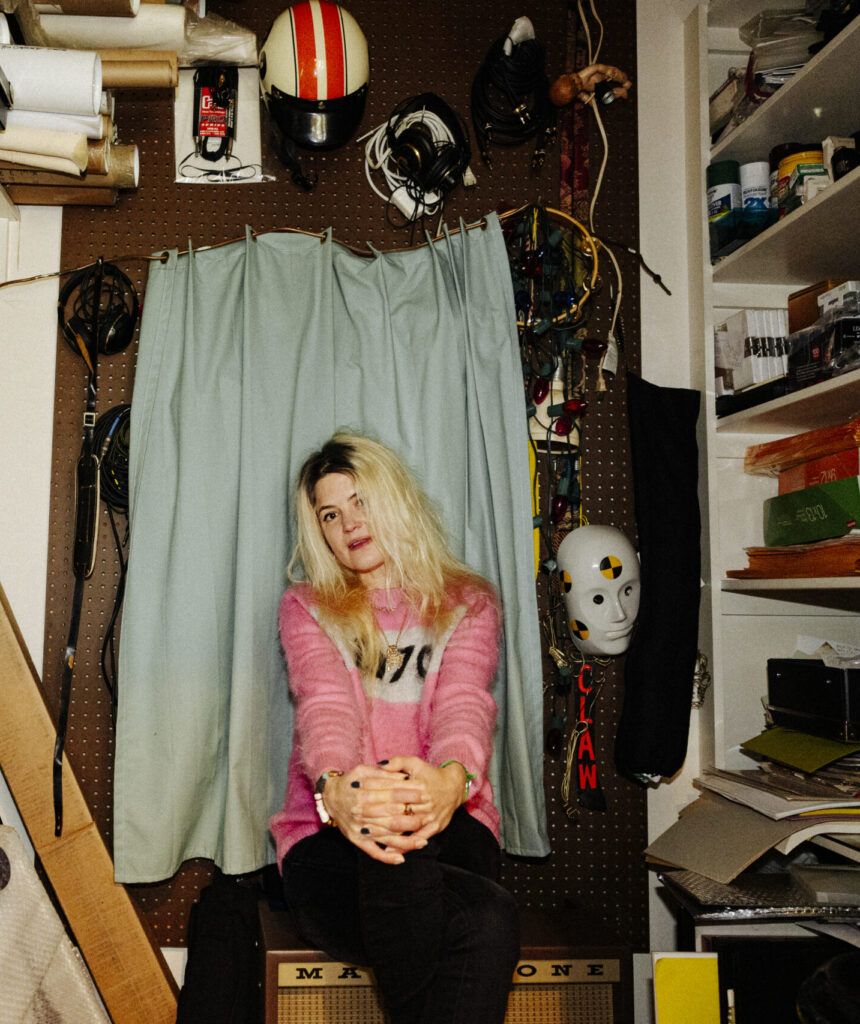
Two weeks later, she was on stage with Love at Reading Festival in front of 64,000 fans for a tour that had been booked long before either of the tragedies. It was also only Auf der Marr’s seventh live gig. Her memoir opens with the moment, and today, sat in her airy New York studio surrounded by her photographs (just some of the 10,000 she took during her career), she points to ones she took of the crowd that day – including one of Love “like a wild animal” backstage, spray painting a heart onto an amp.
“In one chapter of the book, Warrior Goddess, I really wanted to bring the reader on stage with me to experience being next to this fearless warrior,” she recalls. “With Courtney, there’s still no match. There is no woman who has ever given themselves over to the monster within the crowd, to sacrifice herself like that.” She describes Love’s performance that day as “visceral” and “cathartic”. She thinks Love, whom she saw “at her worst and also her honorable best too,” was saved by music. “Music and art can save lives. Creative processes save people’s lives.”
This was something Auf der Maur understood. Even the Good Girls will Cry unpacks some difficult childhood memories, exploring how music served as an escape. “When you’re alone like I was and the way The Cure, The Smiths and Depeche Mode spoke to me – that’s what gave me power not to stay in my bedroom crying. I wanted to get out there, meet new people like me, go to concerts. Music still does that. We’re still doing this for teenagers alone in their bedrooms now.”
Photography also helped her make sense of the world. One of the reasons she took her camera on stage at Reading was that she “knew historic things were happening” but was too young to “unpack it all” just yet. “This was actually generational pivoting for female voices,” she says, of the young women in the audience chiming wildly with the lyrics of feminist anthems like Miss World and Asking for It, a song about believing victims long before #MeToo.
The influence of Hole came full circle for Auf der Maur recently when she took her teenage daughter to see Olivia Rodrigo: they met backstage. “It was one of my proudest moments,” she smiles. “Olivia said to my daughter, ‘Without your mother, none of this could’ve been possible,’” she says, visibly emotional. “I finally got to pull my cool mother card!”
She continues: “Her record cover for Sour was inspired by Live Through This. Courtney did call her out on it at the time [Love thought Olivia didn’t give Hole credit] and then she did give props,” she says. Auf der Maur thinks it’s time for a re-evaluation of Hole. “I don’t think proper due has been given to what those lyrics meant for women in the audience,” she explains, blaming the abuse and misogyny aimed at Love.
Indeed, the musician gives a sense of just how prevalent the animosity to Love was, not least via a difficult first meeting she had with Foo Fighters’ Dave Grohl, also Cobain’s bandmate in Nirvana. She writes of the meeting in her memoir, saying, “If one wanted to go down the John and Yoko ‘blame the woman for ruining your band route…” After an intervention from a friend, Grohl reportedly apologised, and the pair became close, even ending up in a relationship. In the book, love letters Grohl sent to Auf der Maur by fax – “so nineties”, she laughs – are included. She also divulges a brief fling with Corgan and shares “sisterly” letters from Love, “looking out for her.”
Did she worry about going public with some of these? “I’m not enemies with anyone,” she smiles. “They all trust me, they love me, they know I am not here to make a buck. I do not exploit fame for money or success…all of them endorsed it,” she says of the three. “Everyone was fine.”
Indeed, she’s just come from making a podcast with Corgan (“my mentor told me things about my musicianship that he’s never told me. It really was this special moment”), while Love called her for lunch afterwards. Out of touch for a decade, the pair have reconnected in recent years. She talks about her joy of recording on Love’s solo album last year and reveals she gave her a dress for her recent New York Times cover shoot. “How beautiful that we were both in hibernation for 15 years, and poetically and accidentally we’re coming back at the same time,” she says, referring to both of their respective projects out this year.
The day before we speak, Love, now back on Instagram, broke the internet after teasing a Hole reunion. “She’s stoking the fire because of how this is happening with our projects,” she laughs. “And for a band like Hole…we don’t do anything for fashion or success reasons. No reunion would be planned in advance or on purpose,” she laughs. “I have no answers for you other than 2026 is an exciting year for both of us.”
After this ambiguous answer (could it be?!), her phone rings. “Can you just hold, it’s Mark Ronson!” She goes off to take the call and returns, beaming. She reveals he’s moderating a Q&A in New York with her around the book and is clearly thrilled. “He’s so generous and such a gentleman,” she smiles. He also sent her a photo of her recent cover, wearing Love’s dress. Her pride is palpable.
Auf der Maur admits that excavating some of the memories for this book was a painful process, particularly when writing about the time after she left Hole, broke, and joined the Smashing Pumpkins. “Some of the things I wrote about, I hadn’t even talked to my therapist about them. Some of it was so locked away. It was a necessity for my evolution as a person,” she says, describing it as a “healing, purging journey.” It could be exhilarating for her, too. “I couldn’t have imagined that a solo retreat by the fire with my cats and laptop could be as invigorating as being on stage in front of thousands of people. It felt like a life force.”
She released two solo albums after leaving the Pumpkins before walking away from the industry and later setting up a thriving arts centre in New York. “It was a very conscious but also difficult decision to cut music out of my life. It was entirely for my daughter,” she explains. “My mother was a single mother who worked. I didn’t have the kind of attention I wanted to give my daughter…motherhood, I knew, would transform me.”
Writing the book, she says, was also partly about her finding a way back to music. “It was me wanting to reflect on the question of what did I lose when I left music? I was hoping, secretly, I could reclaim not just my voice and place in music, but also my love of music and trick myself into going back in some way through the back door.”
It worked; Auf der Maur is back in the studio now and busy making music that will arrive soon – she is working on book number two. More than any of this, though, she still just wants her friend to finally get the respect she deserves. “I’m still so proud of her, this fearless warrior. And always will be.”